

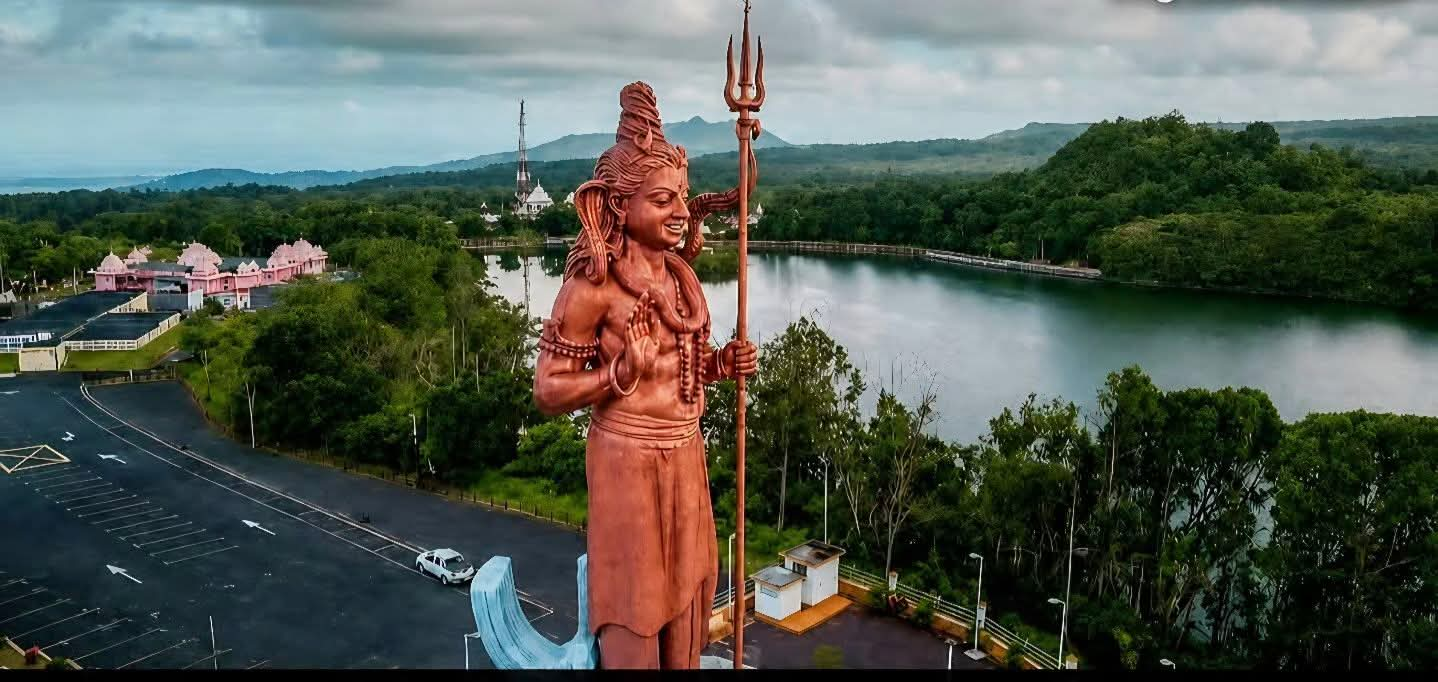
Ganga Talao, and extention of Mother Ganga herself is a living embodiment of Sanatan faith—where the earthly and the divine seem to meet.
The sanctity of Ganga Talao is the fruit of deep faith, austerity, and divine revelation. It stands today as a symbol of the spiritual resilience of the Hindu diaspora—those who, despite displacement from Bharat, carried the flame of Sanatan Dharma in their hearts and established a sacred Ganga on foreign soil.
Yet, a troubling reality confronts us today. Ganga Talao is gradually being reduced—by ignorance and negligence—into a site of casual sightseeing, a picnic destination, even a place of fanfare by foreigners. The serene vibrations of mantras are increasingly interrupted by noise, inappropriate attire, and behavior that betrays a lack of understanding of its sacredness.
Visitors, particularly uninformed tourists, arrive without any guidance. They walk into a living temple space dressed sometimes disrespectfully, unaware that they are stepping into a sacred place of deep religious sensitivity.
The consumption or presence of non-vegetarian food in such a sacred zone is not merely inappropriate—it is a direct affront to the spiritual purity of the place.
For years, it has been voiced—by priests, devotees, concerned citizens and various federations —that a structured briefing system must be implemented. Hotels, taxi drivers, tour operators—those who serve as the first point of contact for tourists—must be entrusted with a simple but essential responsibility:
1. To inform visitors that Ganga Talao is not a tourist attraction, but a place of sacred pilgrimage .
2. A basic code of conduct must be clearly communicated.
3. Respectful dress covering the body appropriately
4. Absolute prohibition of non-vegetarian food and alcohol
5. Maintenance of silence and decorum
6. Respect for ongoing rituals and devotees
Such awareness is not restrictive—it is respectful. It fosters cultural understanding and elevates the visitor’s experience from mere sightseeing to meaningful encounter.
Despite repeated appeals, why has there been no firm implementation of guidelines from the authorities?
Is sanctity not worth protecting?
Is devotion not deserving of dignity? Protection of a sacred space is not merely administrative duty; it is a moral obligation.
The recent letter addressed by the Mauritius Sanatan Dharma Temples Federation to the relevant authorities is not just a document—it is a call of conscience. It reflects the collective voice of a community that seeks not confrontation, but preservation; not exclusion, but respectful inclusion.
Let us hope—earnestly and urgently—that this appeal does not fade into silence like many before it.
Ganga Talao is not asking for protection—it is deserving of it.
If we fail to act now, we risk losing not just the sanctity of a place, but the soul of a tradition. A sacred space, once diminished, is not easily restored.
For Ganga Talao is not merely water—it is faith in liquid form, and its sanctity must remain untouched, unbroken, and eternal.
Om Namah Shivaya.
Sarvey Bhawantu Sukhinah
Om Shanti
Pt. Ved Goopee
Views: 6