
Introduction
The impending visit of Dag Heward-Mills to Mauritius for a healing crusade at Domaine Les Pailles is generating growing controversy—not only for its claims of miraculous healing, but now also for serious legal concerns.
A formal complaint has been addressed to the Prime Minister’s Office alleging that the evangelist may be in breach of Mauritius immigration laws, raising critical questions about both the legitimacy and the intent of the event.
Legal Controversy: Is the Event Even Allowed?
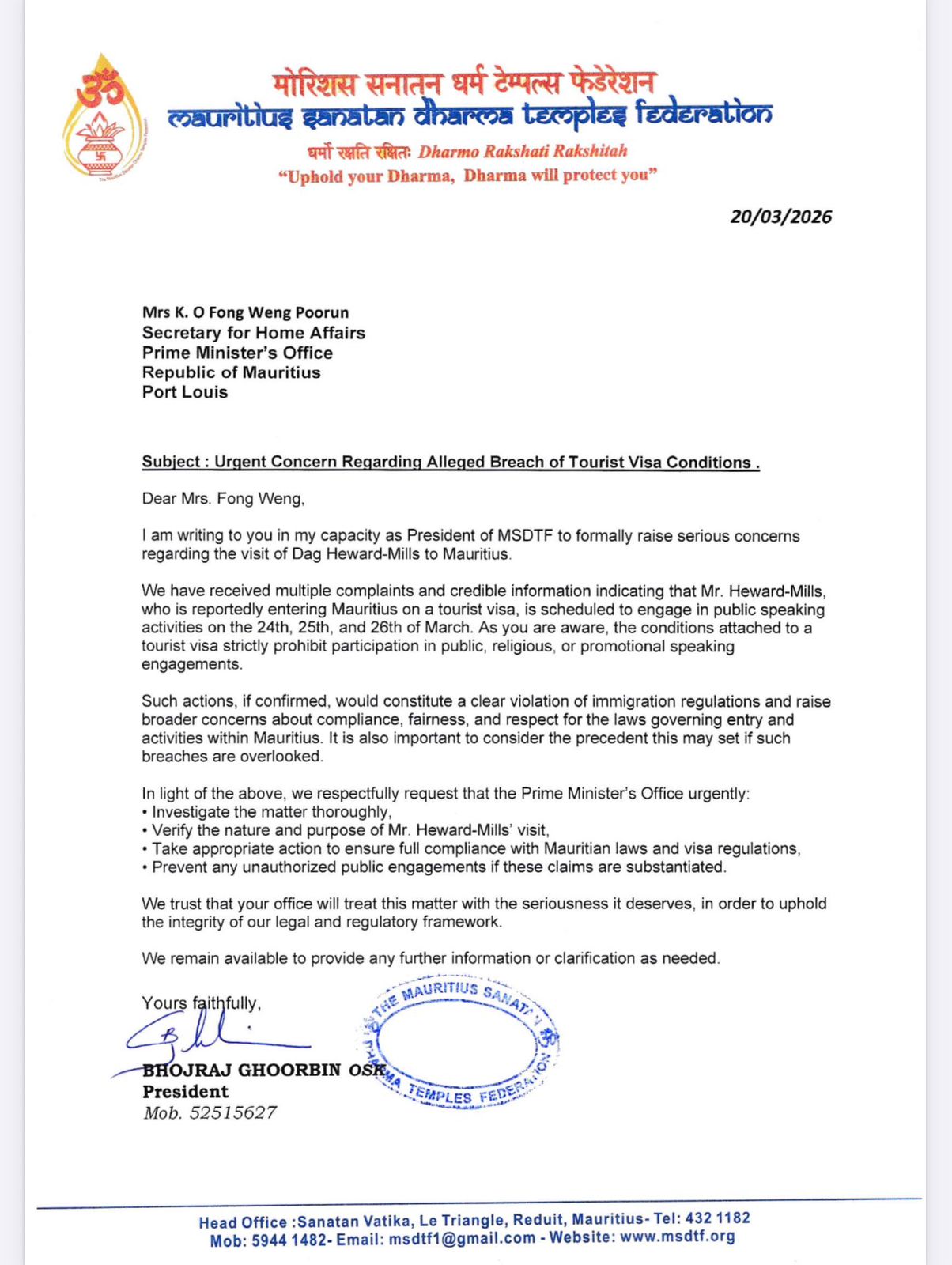
A correspondence from the Mauritius Sanatan Dharma Temples Federation (MSDTF) has raised an urgent issue:
Dag Heward-Mills is reportedly entering Mauritius on a tourist visa, yet is scheduled to engage in:
– Public speaking
– Religious preaching
– Promotional activities
Under Mauritian law, a tourist visa does not permit public speaking or religious engagements.
The letter formally requests authorities to:
– Investigate the matter
– Verify the purpose of the visit
– Prevent any unauthorized public activities
If confirmed, this would constitute a clear violation of immigration regulations.
In a country where Hindu places of worship are systematically targeted by the legal enforcement for as little as a 5cm wall, allowing people of other faiths to hold mass events without any legal authorisation sends a very wrong single to the Hindu majority electorate of the country. Not just second-class citizens, this literally says that Hindus are oppressed and that Hindu rights simply do not matter to the government of the day!
What Is the Healing Jesus Campaign?
Dag Heward-Mills is known globally for organizing large-scale evangelistic events called “Healing Jesus Campaigns.” These typically involve:
– Preaching Christianity
– Public prayers for healing
– Emotional testimonies
– Invitations to convert
While presented as spiritual gatherings, these events function as high-impact religious recruitment platforms.
Can Prayer Really Heal Disease?
The central promise of these crusades is healing through prayer. However:
– There is no scientific evidence that prayer can cure serious illnesses
– No hospital system operates on miracle-based healing
– No verified clinical trials support such claims
If prayer-based healing were consistently effective, we would expect:
– Dedicated miracle hospitals
– Documented, repeatable cures
– Integration into modern healthcare systems
None of these exist.
Why Are There No “Miracle Hospitals”?
This remains one of the strongest unanswered questions.
Modern medicine is built on:
- Evidence
- Replication
- Accountability
Faith healing relies instead on:
- Anecdotal testimonies
- Emotional influence
- Unverified claims
The absence of medical institutions based on miracle healing strongly suggests that these claims cannot withstand scientific scrutiny.
The Psychology Behind Healing Crusades
Such events are carefully structured to create powerful psychological effects:
- Large crowds amplify belief
- Music and preaching elevate emotional intensity
- Suggestion and expectation trigger placebo responses
Attendees may feel temporary relief—but this is often:
- Psychological rather than physical
- Short-lived rather than permanent
Targeting Vulnerable Communities in Mauritius
Mauritius is a Hindu-majority country, with a strong tradition of religious coexistence. However, the nature of these crusades raises concerns.
These events often attract individuals who are:
- Ill or suffering
- Emotionally distressed
- Financially vulnerable
The messaging can create an implicit exchange:
«“Come, be healed, and accept this faith.”»
This raises ethical concerns about targeting vulnerable populations for conversion under the promise of healing.
Religious Conversion and Ethical Questions
While freedom of religion is fundamental, ethical issues arise when:
- Conversion is linked to promises of healing
- Claims are made without verifiable evidence
- Individuals are influenced during moments of weakness
This creates a transactional form of belief, rather than a genuinely informed spiritual choice.
A Hindu Perspective on Healing
Hindu traditions approach healing holistically, integrating:
Ayurveda (physical health)
Yoga and meditation (mental balance)
Dharma (spiritual alignment)
These systems emphasize:
- Long-term well-being
- Balance and discipline
- Coexistence with modern medicine
They do not rely on instant miracle claims without evidence.
Conclusion
The Dag Heward-Mills Mauritius healing crusade now raises two major concerns:
1. Scientific credibility – There is no evidence supporting miraculous healing through prayer
2. Legal compliance – The event itself may violate immigration laws
In a country like Mauritius—diverse, educated, and legally structured—such events must be examined carefully.
Faith can offer comfort. But when:
– It replaces evidence
– Targets vulnerable individuals
– And potentially bypasses legal frameworks
…it risks becoming not a source of false hope, but a source of misleading promises and controversy.
FAQ: Dag Heward-Mills Mauritius Controversy
Q: When is the event taking place?
A: 24–26 March at Domaine Les Pailles.
Q: What is the legal issue involved?
A: The speaker is allegedly entering on a tourist visa, which does not permit public speaking or religious preaching.
Q: Is faith healing scientifically proven?
A: No, there is no reliable scientific evidence that prayer can cure diseases.
Q: Why is the event controversial in Mauritius?
A: Due to concerns about religious conversion, targeting vulnerable individuals, and possible legal violations.
Views: 28